Showing posts with label movies. Show all posts

The Best Dreams Are Made in Blue: JAMES CAMERON‟S AVATAR (Edward Ong)


I have been dreaming in phosphorescent blue ever since I saw Avatar in 3D. This is not a sign of insanity; it is the intended result of a visionary director who has seen the future of film-making and is not shy about sharing it with us. James Cameron, though a thoroughly commercial Hollywood director a less discernible viewer would quickly dismiss as “just another Michael Bay”, is a headstrong, uncompromising artist who dreams BIG. His Aliens and The Abyss shaped my teenage fantasy world; the 90‟s Terminator 2: Judgment Day redefined the SF genre in such a way it left other SF directors with little room to manoeuvre (does anyone even remember what Terminator 3 is about?). The year is 2009 and Cameron has finally unleashed his blue dream on our colourless world. And what a dream it is.

Very little should be said about the film‟s pioneering use of 3D (never mind that Robert Zemeckis claimed he had used it first in The Polar Express). Enough articles and blogs have been written about the special effects. Critics near and far all agreed that the film offers some of the most astounding visual effects moviegoers have witnessed since the beginning of cinema. What marks Avatar, for me, as an effects-laden film quite different from, say, Transformers 2, is its ingenious fusion of the visual and the cerebral. While you are being bombarded in your plush theatre-seat by eye-popping effects, you are also being challenged - via convincing, absolutely satisfying characterisation - to ponder on humanity‟s quirky ways. In other words, James Cameron is not Michael Bay.

The hero always saves the day. Just sit down and watch any Hollywood-produced adventures and you will see this notion hammered home again and again. Viewers never seem to tire of this: the testosterone-charged alpha male, usually not blessed with eloquence, whips out his big gun at all the critical moments and the whole world sighs with relief. We are a species obsessed with the raw power of the male; we equate strength with Superman and Conan. The weak - especially the fairer sex - are forever marginalised and scorned. They are best removed from sight lest they remind us of our inherent frailties. Thankfully, Cameron does not see it this way.

It started with Aliens, which gave birth to the ultimate space heroine Lt. Ellen Ripley (Sigourney Weaver). The Ripley character had already appeared in Ridley Scott‟s Alien, as an inexperienced, introverted warrant officer. The surprisewas great, then, when she was the only character to survive the alien‟s relentlessness. Cameron saw this and understood the character‟s potential to be iconised. For Aliens, he made Ripley the central character, the one to lead a tough crew of soldiers into the lair of the aliens. She was their chief advisor, their “mother figure”. When things eventually slid from bad to worse for the crew, Ripley picked up her own machine gun and had her, by now infamous, showdown with the Queen Alien.

Jake Sully (Sam Worthington) is the hero in Avatar. If you had not been too baffled by the effects that helped transform him into a blue giant, you would have noticed he had intentionally been written as an anti-hero. Our first impression of him is that of the underdog, the black sheep. He is invited to join the Avatar project because his brother, an expertly trained, PhD-holding biologist, has been killed. Since he and his brother share the same genes, he is considered a convenient replacement - even though he is paraplegic, an ex-marine, and has no scientific background (which Dr Grace Augustine, leader of the project, emphatically underlines for us in the first thirty minutes of the film). As the film progresses, we see how Jake integrates into the Na‟vi community on Pandora. He is initially seen by them as a “moron”, a clumsy member of the Sky People whose cup is already too full to be filled. To win their trust, he has to start from zero: he learns their impossible language, their hunting skills, their communal unity, their oneness with their Mother Nature.

Through it all, he is guided by two prominent female figures: Dr Grace Augustine (Sigourney Weaver) and Neytiri (Zoe Saldana), the daughter of the Na‟vi chief.

Grace is Cameron‟s answer to the Earth Mother. She represents diplomacy, knowledge and humaneness. It is thanks to her thirst for knowledge that the Na‟vi culture is less of a mystery to us “Sky People”. She believes that mutual understanding between alien cultures is the key to universal peace. Guns are never a solution, a point that she brings up time and again in educating our hero. Her relationship with Jake is awkward from the onset (like the Na‟vi, she sees him as a gun-toting moron), but she learns in time, just as Neytiri does, that Jake has a “strong heart”, that he is perhaps the missing link between the two cultures. That Grace in the end dies and sparks the ultimate battle in the film is to be expected. Her death, or return to Mother Nature, is part of the natural process, and enables Jake to fulfil his destiny as hero-warrior.

Neytiri is no ordinary princess in the Disney sense: she kills her enemies with poisoned arrows, swings from tree to tree with the agility of a trapeze artist, flies an ikran like nobody‟s business, and when she has to, stands up to her parents in defence of her illicit love for Jake. Being the first to recognise the warrior qualities in Jake, she embraces him and introduces him to all things Na‟vi. She teaches him the secret language of the forest and the importance of the Tree of Souls to her people. Jake is initially referred to as a “baby”, stupid and clumsy, but under Neytiri‟s expert tutelage, he grows into a fierce warrior who will save Pandora from the destruction of the “Sky People”.

But our hero would have died twice over had it not been for Neytiri‟s lightning moves. In the final battle between man and machine, Jake would have met his maker if Neytiri had not, in timely Hollywood fashion, shot her deadly arrows at the iron-clad Colonel Quaritch. And moments later, when Jake‟s actual body is on the verge of dying of asphixiation, it is she who gives him the oxygen mask in time and keeps death at bay. When that scene closes with her cradling Jake‟s human body in her arms like Mary did Jesus, the conventional understanding of heroism has been thoroughly smashed.

As if subverting heroism were not enough, Cameron also had to tackle that age-old devil: accountability, racial and ecological. Pandora is, of course, a metaphor of sorts for Planet Earth before human intervention. Its verdant treasures, like Earth‟s, benefit its inhabitants as long as they agree to accord them with the highest respect. The “Sky People”, or simply Earthlings, have no understanding of this sort of high-brow reverence and can only view Pandora‟s natural wealth through monetary lenses. Their goal is to plunder its resources. If the “primitive” inhabitants get in the way, you just roll them over with a tank. This is Cameron‟s futuristic interpretation of that curious phenomenon we have come to know as colonialism, where a supposedly “superior” race helps civilise an “inferior” one while draining it of every drop of dignity and worth. The “Sky People” are hellbent on owning Pandora, even if it means eliminating its indigenous tribes. If this sounds overly familiar to us, it is because it is a historical reality, not a figment of Cameron‟s imagination.

The ecological aspect of the film is also its most pertinent. Despite global warming having recently been exposed as a global hoax, it remains hard to ignore the fact that the human race will not think twice about stripping Mother Nature bare for a few dirty dollars. In Avatar, Mother Nature strikes back with teeth and claws, alongside Jake and the tribes. The lesson is this: bite the hand that feeds you and you will find yourself mauled alive. In reality, Mother Nature punishes her violators with landslides, floods and toxic air. The landslide tragedies that have marked the lives of thousands are poignant in that they could easily have been avoided had it not been for the indiscretion and avarice of contractors and politicians. My former hometown, for instance, has been marred beyond recognition by countless so-called “exclusive home projects”. When I take a drive along the once deserted road leading to Batu Ferringhi, all I see are newly cleared hillsides waiting for more “exclusive home projects”, courtesy of the unconscionable local government that will sign away any piece of land under the shade of self-gain. The human greed Cameron portrays is thus more universal than anyone of us would like to admit.

In Avatar, this generation of moviegoers has seen the new, breath-taking possibilities the SF genre can offer. It is capable of both wowing with state-of-the-art digital magic and re-shaping perspectives by appealing to our intellect. Even though the real world is falling apart all around us, at least in art there is still the possibility of dreaming in impossible colours.
Continue Reading...

In the Realm of Science Fiction


In conjunction with this month‟s topic „Utopia‟, I have attempted to compile a list of science fiction films which I think should be viewed by everyone at least once (even though you may think science fiction should just be treated as that – fiction). Science fiction is the place where film-makers and writers can let their imagination gallop free while never losing sight of the weighty issue of the rise and fall of Man. It is well worth taking a look!
Due to limited space, I have not been able to include all my favourite SF films here. James Cameron‟s „The Abyss‟ and „Terminator 2: Judgment Day‟, „The Matrix‟, „Invasion of the Body Snatches‟, Steven Spielberg‟s „E.T.‟ and „War of the Worlds‟, „Independence Day‟, and „Metropolis‟ deserve at least a mention.

2001 : A Space Odyssey (1968)

Almost unanimously voted as the ultimate SF film with brains, this is a hallucinogenic journey into deep space through the directorial genius that was Stanley Kubrick. Mankind finds a mysterious artificial monolith on the moon and is intrigued by the signal it sends to Jupiter. What follows is a mind-blowing trip into the unknown, culminating in a climax which defies rational explanations. Kubrick‟s film was meant as a tribute to space symbolism. There is only 40 minutes‟ worth of dialogue in a film which is close to three hours long; the rest of it is either filled with silence (accurately depicting life in space) or sweeping classical pieces by Johann Strauss (The Blue Danube Waltz) and Richard Strauss (Also Sprach Zarathustra). What is the film about? Alien intelligence? Mankind‟s destructiveness? The precariousness of technology? God? Nobody knows. I have seen the film at least a dozen times but have not been able to make up my mind as to what it is about yet… Just watch it for the majestic visuals – with the volume turned up high.


Aliens (1986)
James Cameron (Titanic, Avatar) unleashed this stupendous, adrenaline-charged sequel to Alien on an unsuspecting world in the mid-eighties and created an instant SF classic featuring a very manly Sigourney Weaver as Lieutenant Ripley – the only survivor of the alien-infested spacecraft Nostromo. This time she is asked by the US government to hitch a ride with the special squad sent to investigate a colonised planet that has gone mysteriously quiet. The tagline already says it: “This time it‟s war.” Cameron pulled out all the stops, and the special effects, to this day, are unparalleled. The ending with the brutal showdown between Ripley and the Queen appeals to the animal in all of us and is utterly satisfying. I actually saw this one in the cinema with my dad when I was only fourteen. When it was over, he turned to me and said, “I think we just saw cinematic history.” He was right.


A.I.: Artificial Intelligence (2001)
Stanley Kubrick started it in the 70s, passed it on to Steven Spielberg in the early 90s, and it did not get developed until Kubrick‟s death in 1999. The final product is a thing of split personality: Kubrick‟s weighty pessimism is all in place, but so is Spielberg‟s naïve romanticism (the only weak moment in the film is the saccharine happy ending). Haley Joel Osment (The Sixth Sense) is an android made to replace a dead child. When the parents have their own child again, they decide to rid of him (he is an “it” to them). The film raises interesting questions about the moral ethics surrounding artificial intelligence. The futuristic world portrayed in the film is one without hope; the human race is destined to destroy itself. Dark, elegiac, thought-provoking, this is the android movie, outshining I, Robot, Surrogates and other tepid attempts.


Close Encounters of the Third Kind (1977)

“E.T. for adults”: that‟s how most people describe this early Spielberg masterpiece. The movie has a simple plot (most great movies work this way): strange phenomena are occurring across the world; people disappear after a close encounter with inexplicable lights in the sky; a family man (played by Richard Dreyfuss, who had also appeared in Spielberg‟s previous monster project Jaws) gets telepathic visions and the urge to build a model of Devil‟s Tower right in the middle of his living room. As his visions intensify, he discovers that a lot of people across the country have been receiving the same “message” and are being urged to come together to meet their summoners. What makes this movie great? Its incredible build-up of suspense and fresh approach to the theme of extraterrestrial beings. When the movie ends, after the seriously breathtaking finale, you get the sense that you are and cannot be alone in this universe. It is only a matter of time before we meet “them”.


Contact (1997)
Jodie Foster is Dr. Ellie Arroway, a SETI researcher who, after years of looking for signs to prove that aliens exist, finally gets what she wishes for: she receives intelligent signals from deep space. When the signals are decoded, they are found, to the excitement and consternation of the American government, to contain instructions as to how to build a giant machine which may function as some kind of portal which will link the alien world to ours. The machine is built and Ellie, after much grief, gets to be the one to go. Then the movie spirals into the craziest, most mind-rattling space travel ever caught on celluloid. The ending is anything but satisfying as it leaves you with more questions than answers (somehow the question of the existence of God is also raised). For me personally, the most memorable scene is where Ellie ends up in this awe-inspiring Milky Way and she breathlessly says to herself, “They should‟ve sent a poet.”


Star Trek (2009)
This is what I call a rejuvenation of a tired series whose appeal I have never really understood (I have always been a fan of Star Wars). Director JJ Abrams (Lost) surprised both friends and foes with this intelligent and engaging intergalactic saga about the beginning of the Enterprise. An impressive Chris Pine plays James T. Kirk years before he was to become captain of the ship. The action scenes are stunning set pieces that showcase the state-of-the-art special effects available to modern Hollywood – something that even non-Trekkies can appreciate. The cerebral plot is also strangely TOK-ish. Look out for the surprise appearances of Eric Bana, Leonard Nimoy (the original Spock) and Winona Ryder.


Star Wars: Return of the Jedi (1983)
There is still an ongoing discussion among Star Wars fans as to which episode is the most accomplished (the new trilogy is definitely out). The Empire Strikes Back, the second in the old trilogy, is usually held in high regard because of its pathos. My personal favourite, though, has always been this one. Why? Because it is one hell of a ride from start to finish! This is also the episode that introduces us to some quirky (now legendary) characters: the Ewoks and Jabba the Hut. The final battle scene between the two Forces is ingeniously staged. Luke Skywalker is now the hero he has always been destined to be, and when the Evil Star shatters into a million pieces, you would feel like standing on the seat cheering as if you were one of the Ewoks. Long live George Lucas (as long as he does not make any new Star Wars).


lade Runner (1982)
Directed by Ridley Scott after his phenomenal success with Alien, this is perhaps the only SF film noir in existence. Loosely based on the novel Do Androids Dream of Electric Sheep? by Philip K. Dick, it tells the dark tale of a “blade runner” (a policeman specialising in terminating renegade androids) who has been assigned to take out four “skin jobs” (slang for androids) who have hijacked a ship from one of the space colonies back to Earth. The mood of the film is bleak, lethargic and ultra-pessimistic. It is also a film that requires re-watching for it to be completely understood. Scott‟s use of symbolism is obscure, leaving the audience to scratch their heads for answers about the meaning of human life.


Cocoon (1985)
This is more of a melodrama than a proper SF film, though its premise is completely SF. It tells the heartfelt story of the inhabitants of a retirement home in Florida who stumble on some mysterious pods (cocoons) in their swimming pool. After taking a dip they all gain back the health they have lost and life takes on a new meaning. The pods, they soon discover, belong to an alien species who has come to retrieve them. Aliens and old folks begin to bond and there is a proposition: the old folks may leave Earth with the aliens and lead an immortal existence in another corner of the universe. The only hitch? They may not take their family or loved ones with them, and they will never, ever return to Earth… I saw this one in Bangkok, of all places, when I was thirteen. Even though I was too young to understand what it is like to have to face old age, the film did make me think about mortality and such. Veteran Don Ameche won his first Oscar for Best Actor at the age of 78, at the end of a fifty-year career. That‟s what I call immortality!
Continue Reading...

HORROR 101

Horror as a film genre has always suffered from an inferiority complex, despite the fact that over the years some of the greatest films we have had the pleasure to see are firmly rooted in this shadowland. The reason is most people do not see how serious, dramatic issues could be adequately handled in a premise that smacks of absurdism. This perception is only half-true (asinine teenage American slasher films are to blame for this). In the realm of bona-fide horror, things can get as serious as death itself.
I have compiled a list of horror films which I think everyone – young and old – should see. I have been a fan of horror films since childhood (I actually saw the original The Amityville Horror in the cinema. At the time I must have been no older than eight). My father was a film buff and had no qualms about dragging me along to every new release. I remember seeing with him The Omen (the original with Gregory Peck), Halloween (not the remake!), and A Nightmare on Elm Street (the very first one starring Johnny Depp). Those were the days when a child could be exposed to these sorts of things without anyone raising an eyebrow.
Times have changed. Hollywood horror films these days (think Saw, think Hostel, think the appallingly remade Friday the 13th) have degenerated to the point of banality and vulgarity. I am sure this trend reflects the intellectual level of current young cinemagoers. So what does a true horror fan do? He opens up his treasure trove and digs out the past, where horror still carried the sense meant by Marlowe in Heart of Darkness.
Ringu, Ringu 2, Ringu 0 (1998, 1999, 2000)
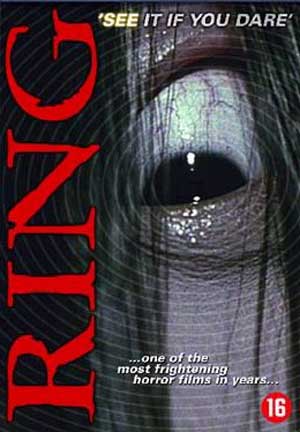
When it comes to under-your-skin horror, no-one can do it better than the Japanese. The Ringu Trilogy jumpstarted in 1998 what was later to be known across the world as J-horror. It all begins with a videotape. Watch it and you will die within seven days, unless you show it to another person and pass on the “curse”. Ingenious plot twists, menacing atmosphere, heart-stopping suspense, and a terrifying finale ensure the trilogy a place in the pantheon of cinematic horror. The Hollywood remake is – contrary to logic – the only remake that actually works, partly thanks to the convincing performance of Naomi Watts. After watching this, you will never look at a TV set the same way. Nor will you want to go near a well.
The Exorcist (1973)
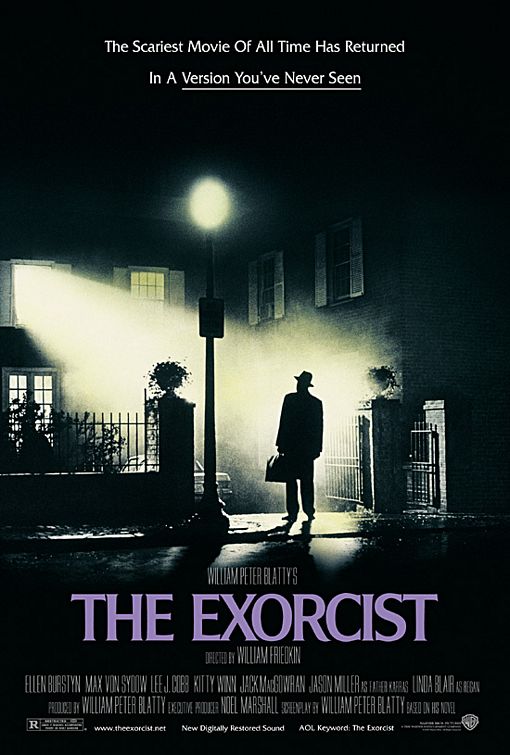
Christian horror at its best. The year was 1973. Cinema was an innocent place with singing nuns and dancing maidens. Then The Exorcist struck like a meteor and sent thousands screaming for their lives. There was mass hysteria. Cinemagoers threw up, prayed for the salvation of their souls, passed out. The Vatican declared the film the work of the Devil, which helped seal its reputation as the most notorious horror film of all time. The plot? It is a simple affair. A teenage girl (marvellously played by a young Linda Blair) is possessed by the Devil and turns the world upside down. The film is famed for its stark contrast between tender dramatic moments and extreme gory shock scenes. The intense finale with the two priests battling the Devil in a bare bedroom is now a classic in film history.


Ju-On (The Grudge) (2003)
If you wonder why in every horror film these days there is a stringy-haired, pale-faced female ghost, wonder no more. Ju-On is the beginning of the vengeful female ghost with the long, flowing hair. Its plot is that of a conventional haunted-house yarn. A family moves into a house with an unsavoury history in suburban Tokyo, and its members are dispatched one by one by a mysterious presence. Anyone who enters the house will get the same treatment… Although it is a transparent plot, director Takashi Shimizu has given it a cerebral approach that taps into our primal fear of the unknown. The creepy soundtrack with the death rattle is effective, and so are the blue-skinned kid and his black cat. Its Japanese sequel is also worth a watch. The American remake, starring Sarah Michelle “Buffy” Gellar, would only work if you did not know the original.
The Sixth Sense (1999)
The Sixth Sense, when it arrived without much fanfare in 1999, scared the trousers off its unsuspecting viewers and made them think at the same time. This is a prime example of a thinking man’s horror film. With M. Night Shyamalan at the helm, the film has turned out to be a disturbing journey about a boy (Haley Joel Osment) who can see them. Bruce Willis, in one of his best roles ever, tries to help him unravel the mystery of the dead, unaware that a mystery of gigantic proportions is awaiting him at the end of the film! If you do not already know how it ends, don’t ask. Favourite scene: Osment saying to Willis, teary-eyed, “I see dead people…” The film was responsible for a barrage of sub-par copycats in the first half of the 21st century. Even Shyamalan himself has been unable to reproduce the same kind of success.
Honogurai Mizu No Soko Kara (Dark Water) (2002)
Another Japanese gem but not as well-known as Ringu or Ju-On because of the lack of a franchise (which is a good thing in this case). Penned by the author of Ringu, Koji Suzuki, this is a far subtler horror tale about a divorced mother and her daughter moving into an old apartment and suffering the disturbances (in the form of dripping black water, midnight footsteps, and a wilful water tank) of perhaps the ghost of a lost child.  Its hair-raising moments are drawn out and breathtakingly effective – in particular the scene where the ghost appears to the daughter during a game of hide and seek. The film also works as a sociological analysis of modern Japan, which adds a poignant shade to the horror. The American remake, though ambitious, falls flat as it overdoes the psychological aspect (the Japanese never lost sight of the horror element). On the up side, it stars the beautiful Jennifer Connolly.
Rosemary’s Baby (1968)
More a psychological thriller than a horror flick, though the shocking ending does give it a supernatural punch. Mia Farrow (ex of Woody Allen) plays one of her best roles as a vulnerable young wife who, together with her new husband, moves into a posh apartment building inhabited by eccentric characters. The couple becomes friends with them, but Farrow realises soon enough that these so-called friends may have a double agenda reeking of a little something called witchcraft. Thinking that her neighbours may all be devil-worshippers, she begins to descend into paranoia and madness. Are they or are they not? Roman Polanski’s deft directorial skills are all evident in this unforgettable suspense thriller. Even Mr Masukor remembers this one.


The Haunting (1963)
The director of The Sound of Music, Robert Wise, picked up Shirley Jackson’s bestselling novel The Haunting of Hill House and turned it into a black-and-white horror masterpiece which left its mark on countless horror films generations after. It tells the story of a lonely spinster (played by a phenomenal Julie Harris) who accepts the challenge of spending a few nights in Hill House along with some psychics handpicked by a paranormal scientist bent on exposing the “horrors” of the gothic mansion. We hear and see the “horrors” through Harris’ character, but the director is shrewd: no special effects are used to spook the audience. The film relies entirely on the set, the ominous mood and lighting to evoke fear – which is a feat no Hollywood films can replicate nowadays. The scene where Harris thinks she is holding her girlfriend’s hand in the dark is supreme. Ignore the lame-brained 90s remake.
Night of the Living Dead (1968)
The only true gore fest on the list. Filmed entirely in black and white, it is an end-of-the-world tale about the dead rising from their graves and feeding on the living. If this sounds over-familiar to you, it is because it has been duplicated numerous times. Contemporary zombie movies like 28 Days/Weeks Later and REC up the gore and go for the adrenaline, but they do not make the skin crawl the way this one does. The zombies here are slow-moving carnivores, but there is nothing scarier than being cornered by a bunch of them. Its controversial sequel Dawn of the Dead, which also has a remake, is just as good but less subtle. By then the Vietnam War was in full swing, and director George A. Romero felt it pertinent to make a horror film about human atrocities.


The Others (2001)
Director Pedro Amenabar (Abres Los Ojos/Open Your Eyes) had probably seen The Sixth Sense and thought that he could pull off the same trick. He was proved right when this taut, suspenseful frightener, starring an unnerving Nicole Kidman, was released to rave reviews in 2001. The Others has all the ingredients of a classic haunted-house movie – the creaking floorboards, the slamming doors, the piano playing in the night – but its approach is entirely unique and bears the stamp of its innovative director. Kidman is sensational as the tormented widow burdened by two children who are never allowed to see daylight due to a rare skin disease. Its surprising denouement (oh, the genius of it!) will have you leap out of your seat.
El Orfanato (The Orphanage) (2007)
This Spanish film produced by Guillermo Del Toro (El Laberinto del Fauno/Pan’s Labyrinth) is a ghost story with a big heart. A couple moves into an erstwhile orphanage by the sea to give themselves and their HIV-infected son some peace of mind. But little do they know, things tend to go bump in the night in the old house. At first glance, this seems to be another haunted-house flick. The twist comes when the son disappears into the house and the mother is convinced he has been abducted by the dead. The ending is both surprising and heartbreaking, achieving the kind of pathos one usually sees in Oscar-worthy dramas. The highlight of the film is when the mother decides to play a game to lure out the ghosts of the dead children – to devastating effect. A triumph in Spanish cinema.


Janghwa, Hongryeon (A Tale of Two Sisters) (2003)
The Koreans, too, jumped on the J-horror bandwagon and produced a memorable hit or two, among which A Tale of Two Sisters must be the most celebrated. A psychological/supernatural drama revolving around two sisters and their (evil?) stepmother, this is a stylishly filmed mind-boggler in the tradition of Hitchcock which will send chills down your spine while confounding you with its intricate plot. It also has a powerful ending which will make you go, “Damn, why didn’t I see that coming?” The American remake, The Uninvited, is another example of why Hollywood should never touch something which is distinctly Asian.
Continue Reading...
 

The Opinionated Ones Copyright © 2009 WoodMag is Designed by Ipietoon for Free Blogger Template